This group has been running for almost two years, and the membership is fairly settled, with a waiting list of those hoping to join! If no-one leaves the group, which we feel is operating at optimum numbers, the only way to solve the waiting list issue will be for someone to step up and volunteer to co-ordinate a second photography group, possibly set-up with slightly different parameters, to run in parallel with the existing group.
We currently meet once a month (on the second Tuesday), and review the photographs submitted by group members on the theme that has previously been agreed for that month, discuss any techniques used to enhance photographs, either when they are being taken, or using computer software after the picture has been taken, and decide on a theme and technique for the following month. Where photographs have been modified it is always interesting to see the original first, so that the effectiveness of, and reasoning behind, any modifications can be seen.
Since my last post (much) earlier in the year we have agreed as a group on a wide variety of themes to influence our photography, including Reflections; Chimneys and Roofs; Entrances and Exits; High Flyers; an Event; Sunshine and Shadows; Autumn; and, our final one for 2025 The Letter V. Some of these themes have been more challenging than others, and some have produced some very liberal interpretations!
The techniques that we have studied include (but are not limited to!): the effect of positioning the horizon; using geometry such as triangles or parallel lines to draw the viewer’s attention to the required area of the picture; and creating a still life picture.
The still life concept proved quite challenging to several members, and we have decided to have a self-run workshop session in January to try and enhance our understanding of this technique.
Following on from our previous subjects (Frame-in-a-Frame, Time and/or Motion, Orange or Purple and Textiles) at our May meeting we submitted photographs on the theme of Reflections: this produced some conventional, well taken, photographs of reflections on water and glass surfaces, as well as some illustrating cognitive reflection.


The conventional approach is illustrated by a stunning picture of Cathedral Peak in the Drakensberg area of South Africa (above, left), with a near-perfect reflection in the lake below. The reflection is so effective that, at the top of the lake, one can see reflected trees more clearly than the trees themselves!
However, one member decided to interpret the brief as referring to cognitive reflection, with a photo taken of the Royal Naval Service memorial at the National Arboretum in Staffordshire (above, right). As well as the reflections in the glass panels (representing sunrise, sunset, and the Oceans) the statue represents a Sailor, head bowed, reflecting on lost comrades.
In June we tasked ourselves with taking and submitting pictures relating to Roofs and Chimneys, as well as trying to illustrate how horizon placement in the final image can affect the viewers perception. Some great photos were taken of the Oxford rooftops from high points such as the Ashmolean Museum, the Carfax Tower and the roof project at Blenheim Palace.
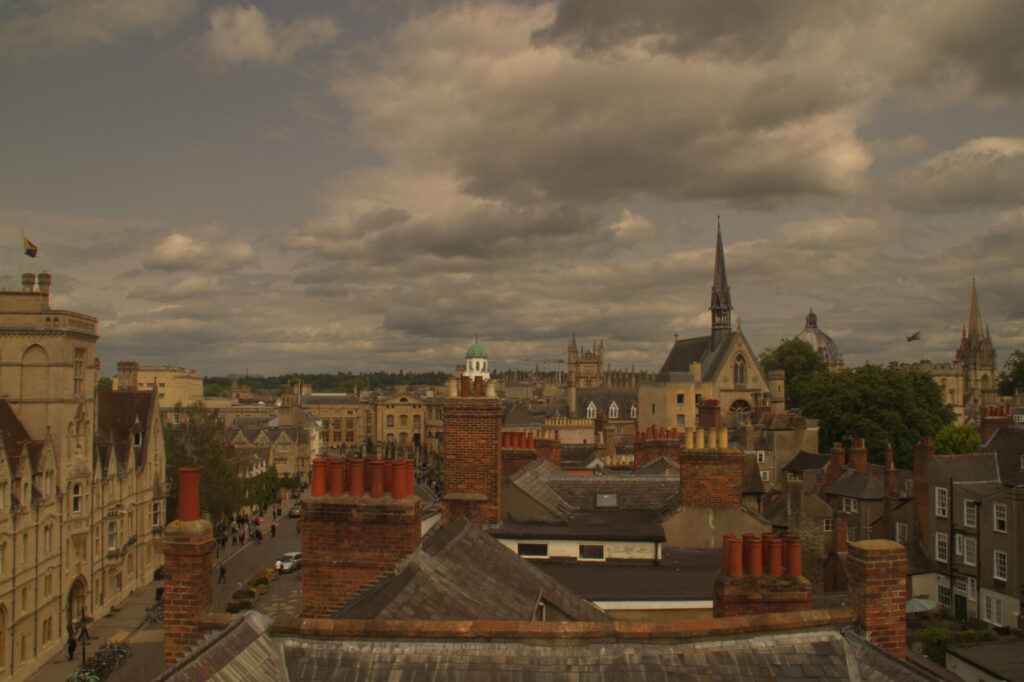
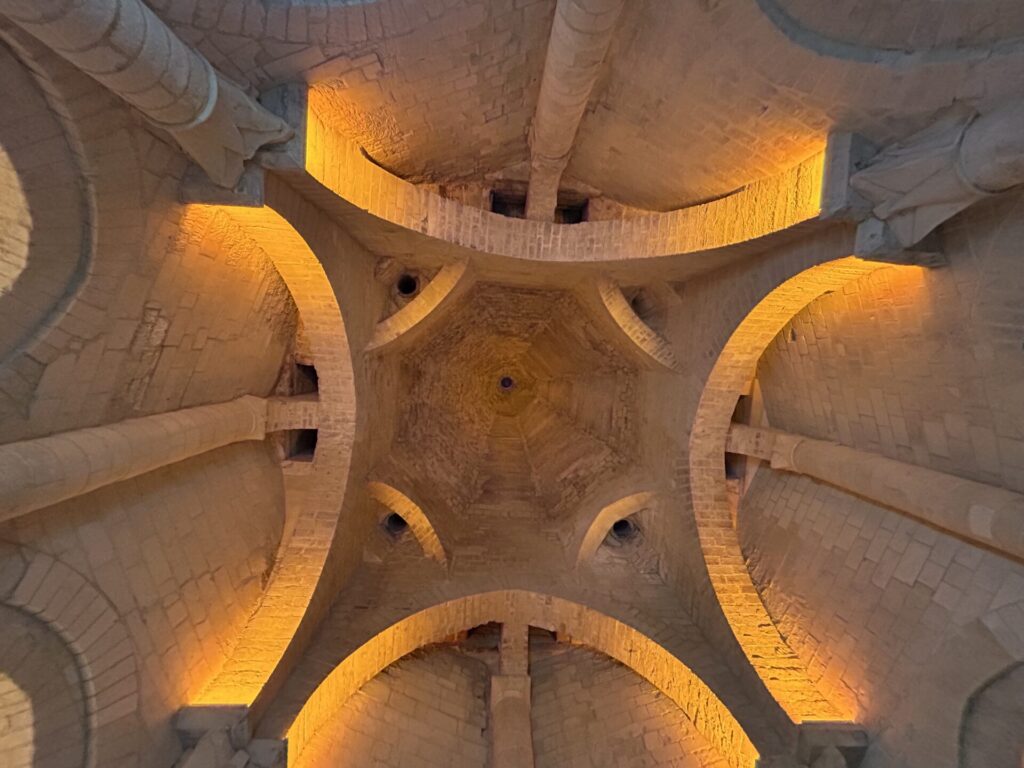
The picture above left was taken of the view of the Oxford rooftops as seen from the top of the Ashmolean Museum. As well as rooftops there are a number of chimneys with varying designs! The one to the right, above, is of the inside of a roof, incorporating interesting lighting effects.
At the June meeting we decided that the brief for July would be Entrances and Exits - as usual interpreted as each member decided! The technique we decided to explore was Leading or Converging lines.
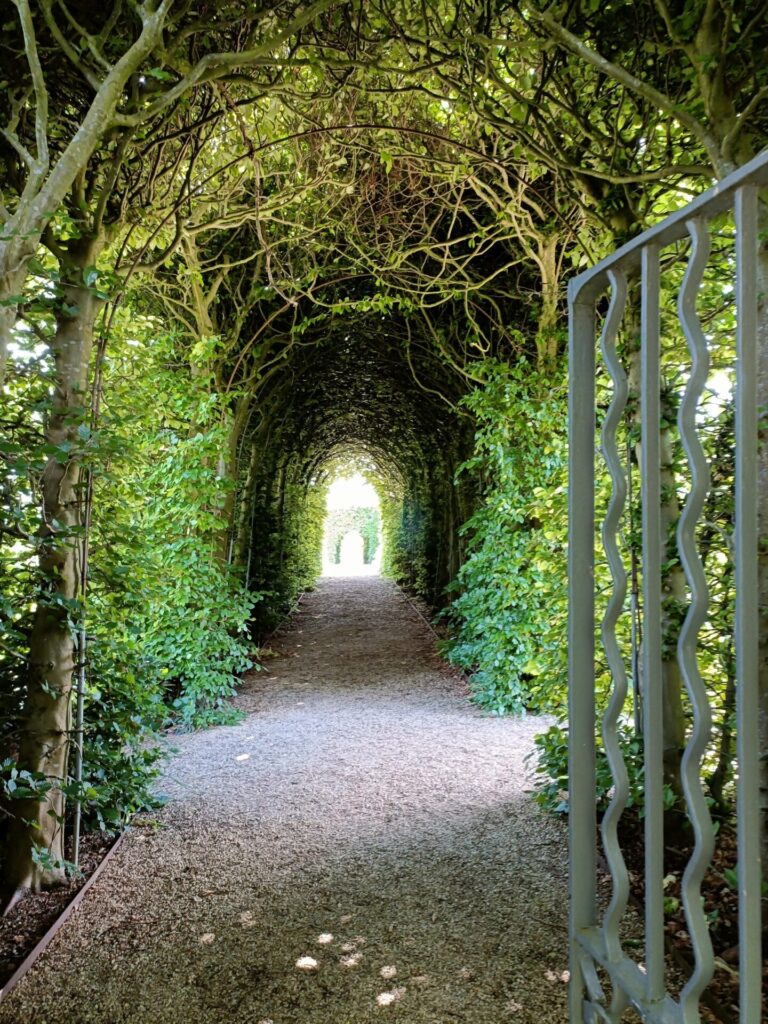

Here we have two different imaginings of entrances/exits: above on the left is an entrance illustrated by the gate to the right of the foreground, with an exit intimated by the far archway. In addition the converging lines lead the viewer's eye from the one to the other. Above right is another interpretation of an entry - Chapter one of a book, invariably the best way to "enter" any book! Other interpretations of the theme included a view looking back up to Blenheim Palace from the bridge on the road leading to the Victory Monument; this also includes the concept of converging lines to lead the viewer's eye up to the palace, as below.

Over the three months covered here the group have taken and reviewed a considerable number of photographs - some taken with mobile phones, some with digital Single Lens Reflex (DSLR) cameras. In some cases digital photographs taken previously have been drawn from member's archives - we have even had some that were taken originally on a film camera, and subsequently digitized. The only "rule" that we have in place regarding submissions is that any photograph should only be submitted once.
Most of the group's members have become adept at digitally modifying their pictures using readily available software. Many of the editing programs that we use claim to have at least some AI capabilities; interpolating the background where objects or people are deleted for example. Sometimes our attempts at enhancing the pictures is more effective than at others. I may well explore picture management in a future blog ... watch this space!
During our meetings, where we discuss and review the submitted pictures, and exchange views on how different techniques work (or, on the other hand, don't work!), the atmosphere has remained upbeat: we are not in competition with each other, rather we do our best to support each other. One thing we are all agreed on, however, is the definition of what constitutes the "BEST" camera - it is the one that you have available when the photographic opportunity arises!
Exploring and improving our photographic competence, and exploring and discussing different techniques in a friendly, non-competitive atmosphere has created a different learning curve for each member of the group, but all very much in keeping with the u3a motto!